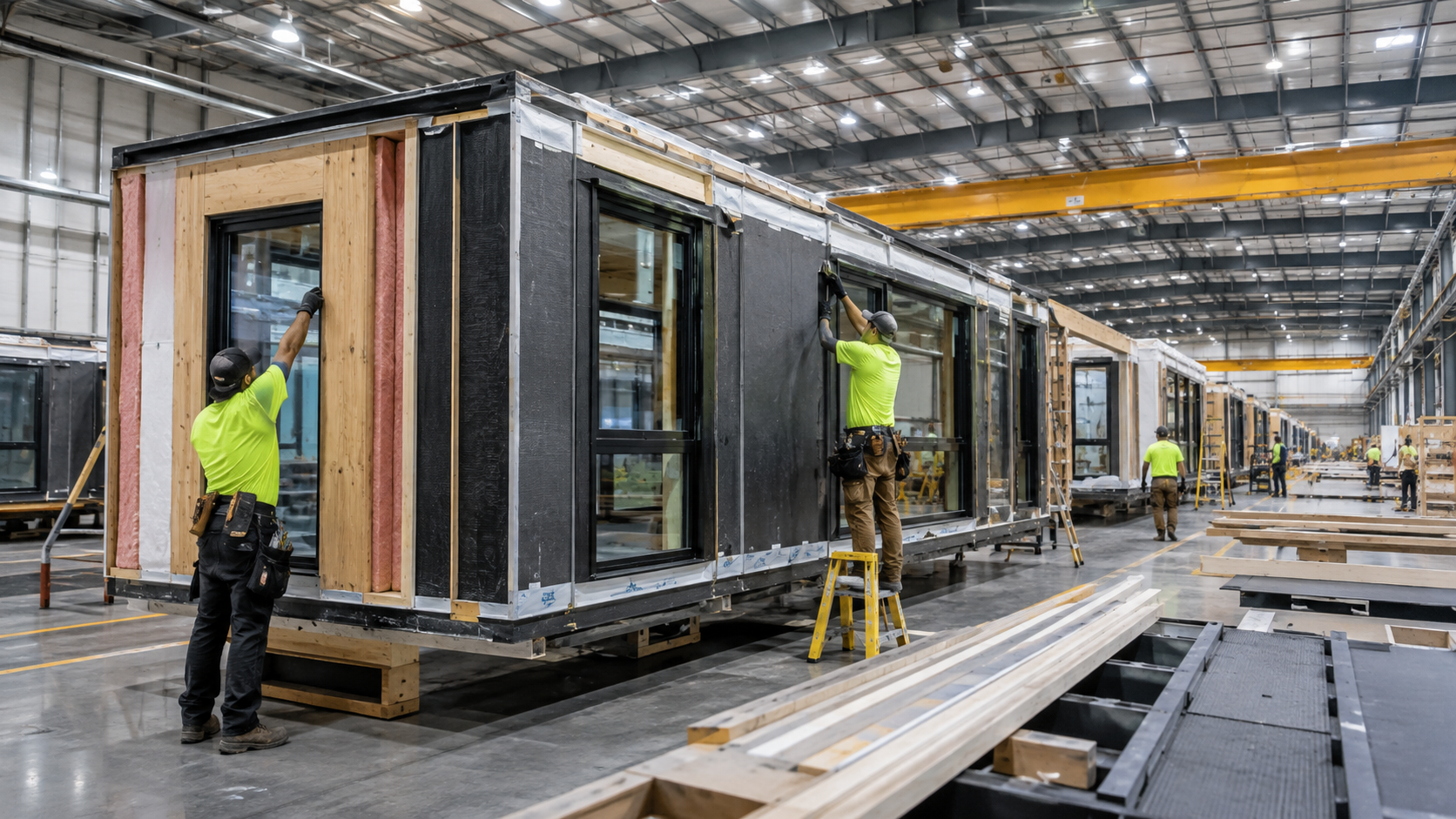
Modular construction shifts a significant share of building work from an exposed site into a controlled factory. Rooms or structural sections are assembled indoors, fitted with services, and transported for final installation. The method is gaining attention as contractors search for faster schedules, more predictable quality, and better ways to manage skilled labor.
Factory production changes the sequence of a project. Site foundations can proceed while modules are built elsewhere, shortening the overall timeline when coordination is strong. Workers use fixed stations, stored tools, and repeatable processes instead of moving constantly around a changing site. Indoor conditions also reduce delays caused by rain, snow, heat, or limited daylight.
Standardization provides efficiency but does not require identical buildings. Designers can combine repeated structural units with different facades, layouts, and finishes. The key is making major decisions earlier. Late changes that are manageable in conventional construction can disrupt a production line, so clients and architects must approve dimensions, materials, and service routes before manufacturing accelerates.
Transport sets practical limits. Modules must fit roads, bridges, and lifting equipment, and they need enough strength to survive movement. A factory far from the project may lose its cost advantage through shipping and crane expenses. Successful plans treat logistics as part of design rather than an activity arranged after the units are complete.
Quality control can improve because inspections occur at consistent stations and materials remain protected indoors. Digital records can link each module with test results and photographs. However, repetition can also repeat defects quickly. Factories need clear stop procedures so a problem is corrected before it moves through dozens of units and reaches the site.
The workforce profile changes as well. Modular plants can provide steady locations and predictable shifts, which may attract people who do not want to travel between sites. They also require production planning, automation maintenance, and supply-chain skills. Traditional trades remain essential, but their work is organized around manufacturing flow and final on-site connections.
Modular methods are not suitable for every design or market. They work best where demand is repeatable and early coordination is possible, such as housing, hotels, schools, and health facilities. When design, factory capacity, transport, and site preparation are aligned, moving work indoors can reduce uncertainty and make construction behave more like a dependable industrial process.
The larger shift is organizational as much as technical. Construction teams must share information earlier, suppliers must meet production rhythms, and clients must understand that certainty at the front of a project creates speed and consistency later.