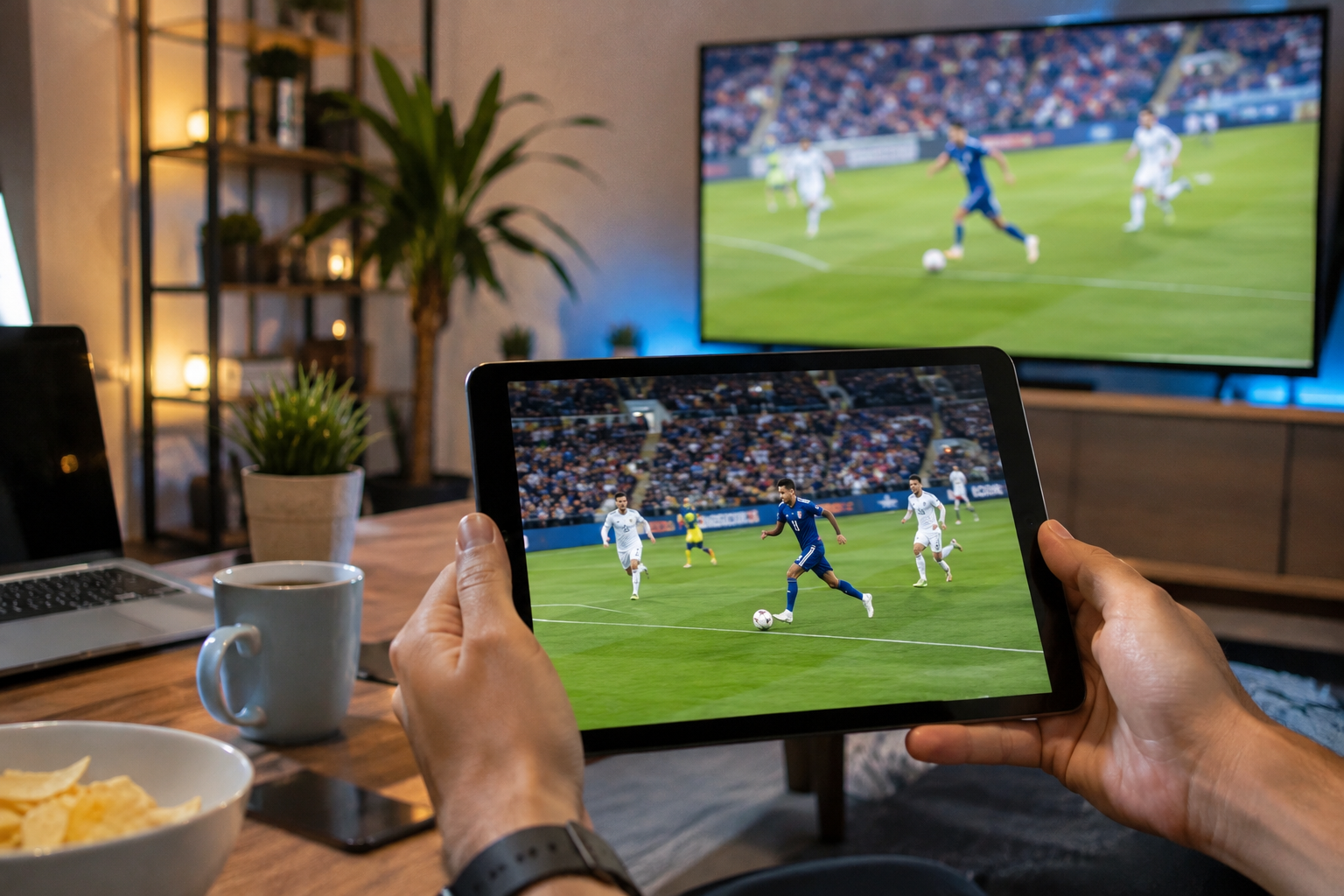
Football has always been more than a game played between two teams. It is a shared experience built around anticipation, rivalries, unexpected victories and the emotions that unfold over ninety minutes. For generations, supporters gathered around television screens, listened to radio commentary or travelled to stadiums to follow their favourite clubs. Today, digital platforms have introduced another dimension to this experience, making it easier to смотреть футбол онлайн and follow matches across different devices and viewing environments.
This transformation is not simply about replacing traditional television with internet video. It reflects a broader change in the relationship between supporters and the sport. Audiences expect greater flexibility, convenient access and the ability to stay connected with football even when they are away from home. At the same time, advances in broadcasting and streaming technology are changing how matches are delivered, watched and discussed.
The modern matchday is increasingly shaped by the combination of football tradition and digital innovation.
Football Has Outgrown the Television Schedule
For a long time, following football required adapting personal routines to broadcast schedules. Supporters had to be near a television at the right time, and missing a live match could mean waiting for a highlights programme or reading a report the following day.
Digital viewing has made this relationship more flexible. A match can now be followed on a laptop during a quiet evening, viewed on a tablet while travelling or watched on a compatible mobile device when a traditional television is unavailable. The screen may change, but the importance of the occasion remains.
This flexibility is particularly relevant for supporters who follow several competitions. Domestic leagues, international tournaments and continental club competitions often have overlapping schedules. Digital access gives viewers more opportunities to keep up with the teams and players they care about.
It has also changed the way people organise their football routines. Some supporters prefer to follow one full match from beginning to end, while others move between fixtures, check important developments and return to selected moments later. Football viewing has become less dependent on one fixed location and one traditional broadcast format.
The most important change is that the matchday experience can now fit more naturally into everyday life.
The Technology Behind a Modern Football Stream
A live football stream may appear straightforward on the screen, but delivering it reliably involves a complex technical process. Images and sound are captured at the stadium, encoded into digital formats and distributed through networks that must serve large numbers of viewers simultaneously.
One important development is adaptive bitrate streaming. Instead of delivering only one fixed video quality, this approach allows a compatible player to select from different versions of the same content according to available network conditions. When the connection becomes weaker, the player can reduce the video bitrate to help maintain continuous playback. When conditions improve, it can move towards a higher-quality version.
Content delivery networks also play an important role. By distributing video through servers positioned closer to viewers, they help reduce the distance data must travel and support large audiences during popular sporting events.
Low-latency streaming is another significant area of development. In live football, delays matter because supporters often follow the same match through several channels. A viewer may hear a neighbour celebrating a goal before the action appears on their screen. Reducing this delay requires careful coordination between encoding, delivery and buffering, while still maintaining stable playback.
These technologies demonstrate that a successful online match experience depends on more than the speed of an internet connection. It requires an entire delivery system working together.
The Importance of Picture Quality and Reliability
Football is a visually demanding sport. The ball moves quickly, players change direction constantly and important decisions can happen in a fraction of a second. Poor picture quality can make it difficult to follow these details, particularly during fast attacking sequences or crowded situations inside the penalty area.
Resolution, frame rate and video compression all influence how clearly the action appears. A higher resolution can reveal more visual detail, while a suitable frame rate helps preserve the smoothness of movement. However, the final experience also depends on the viewer’s screen, connection and playback software.
Reliability is equally important. A technically impressive stream is of limited value if it repeatedly pauses during a dangerous attack. Buffering, connection instability and overloaded delivery systems can interrupt the emotional rhythm of a match.
This is why streaming services must balance visual quality with continuity. In some circumstances, a slightly lower resolution that plays consistently may provide a better experience than a higher-resolution stream that frequently stops.
For supporters, the ideal result is simple: the picture remains clear, the sound stays synchronised and the action continues without unnecessary interruptions.
Mobile Devices Have Created a New Football Audience
The widespread use of smartphones and tablets has made football viewing more portable. Supporters can follow matches in different environments without depending entirely on a large television screen.
This has influenced the design of digital viewing experiences. Interfaces need to work across different display sizes, navigation should remain straightforward, and video players must respond appropriately to changing network conditions. A feature that works well on a desktop computer may need a different layout on a smaller mobile screen.
Portability has also changed the way supporters combine live viewing with other football activities. Some may watch a match while following statistics on another device. Others use mobile platforms to keep up with team news, discuss important moments or check the progress of simultaneous fixtures.
However, convenience should not be confused with unlimited availability. A smooth experience still depends on a suitable connection, compatible equipment and the access conditions of the service being used.
The broader trend is clear: football is no longer tied to one particular screen or viewing location. Digital devices have become an increasingly natural part of the modern supporter experience.
Football as a Shared Cultural Experience
Technology has changed how people watch football, but it has not removed the cultural traditions that give the sport its identity. Supporters continue to associate clubs and national teams with particular cities, communities and family memories. Stadium songs, familiar colours, historic rivalries and matchday rituals remain central to football culture.
Digital viewing has created additional ways to participate in these traditions. People who live far from their favourite club can follow its matches, discuss performances with other supporters and remain connected to a community that may extend across different countries and generations.
A major fixture can bring together people who are physically separated but emotionally invested in the same outcome. Friends may watch from different homes, relatives may follow a club from different cities, and supporters living abroad can maintain an interest in competitions they grew up watching.
This wider reach does not replace the atmosphere of a stadium. The sound of a crowd, the tension before a penalty and the collective reaction to a late goal are difficult to reproduce outside the ground. Yet digital platforms provide another way to preserve and share these experiences.
Football’s cultural strength lies partly in its ability to adapt while keeping its traditions recognisable.
More Than the Ball: Understanding the Tactical Picture
Modern football broadcasts also offer opportunities to appreciate the game beyond the immediate action. Multiple camera angles, replays and analytical graphics can help viewers understand how a particular moment developed.
A goal may look like a simple attacking success, but its origins could lie in a movement made several seconds earlier. A midfielder may draw an opponent out of position, creating space for a forward to receive the ball. A full-back may advance at exactly the right moment, forcing the defence to make a difficult choice.
These details are easier to understand when viewers can examine the sequence again. Replays can reveal the timing of runs, the positioning of defenders and the decisions that influenced the final outcome.
Tactical analysis has become an important part of football culture because it gives supporters another way to engage with the sport. People are increasingly interested not only in who scored but also in how teams create opportunities, control space and respond to changing circumstances.
The result is a richer viewing experience in which entertainment and understanding can exist side by side.
The Social Side of the Digital Matchday
Football has always encouraged conversation. Before a match, supporters debate team selections and possible outcomes. During the game, they react to decisions, celebrate goals and question missed opportunities. After the final whistle, discussions continue around performances and future fixtures.
Digital communication has expanded this social dimension. Supporters can exchange opinions through messaging groups, online communities and social platforms while following the same event from different locations.
This creates a continuous conversation around football. A controversial decision may generate discussion within seconds, while an unexpected result can become a topic of debate long after the broadcast ends.
There are advantages to this accessibility, but it also requires a degree of balance. Constant notifications and online commentary can distract from the match itself. Some viewers prefer to concentrate on the live action and join the wider conversation afterwards.
The best matchday experience is ultimately a personal one. Technology provides additional opportunities, but supporters decide how closely they want to combine viewing with digital interaction.
What the Next Generation of Football Viewing May Bring
The development of football broadcasting is unlikely to stop with today’s streaming formats. Advances in network infrastructure, video production and interactive interfaces may create new ways to experience live sport.
More sophisticated multi-camera presentations could allow viewers to explore different perspectives during selected moments. Improved data visualisation may make tactical information easier to understand without interrupting the flow of a match. Personalised interfaces could help supporters organise competitions, teams and viewing preferences in a more convenient way.
Artificial intelligence may also contribute to video production and analysis. Automated systems can assist with identifying important match events, organising footage and generating statistical insights. These tools could make it easier for broadcasters and content creators to produce additional material around live fixtures.
However, technology must continue to serve the sport rather than dominate it. Football’s appeal comes from uncertainty, skill, emotion and the shared anticipation of what might happen next. No interface or technical feature can manufacture those qualities.
The most successful innovations will be the ones that make the action easier to follow while preserving the character of the game.
A New Way to Experience an Old Passion
Football has changed enormously in the way it is produced, distributed and consumed, yet the central attraction remains familiar. Supporters still wait for important fixtures, celebrate remarkable goals and experience disappointment when a result does not go their way.
Digital technology has made it possible to follow these moments through more flexible viewing environments. Improvements in streaming quality, delivery infrastructure and mobile compatibility have expanded access, while video analysis and online communities have added new dimensions to the matchday experience.
The future of football viewing will likely bring even more options, but the essential purpose will remain unchanged: helping people stay connected with the sport they love.
Whether the match is watched on a large screen at home or followed through a mobile device, its emotional significance comes from the same source. Technology may change the route to the pitch, but the passion waiting at the final whistle is still unmistakably football.