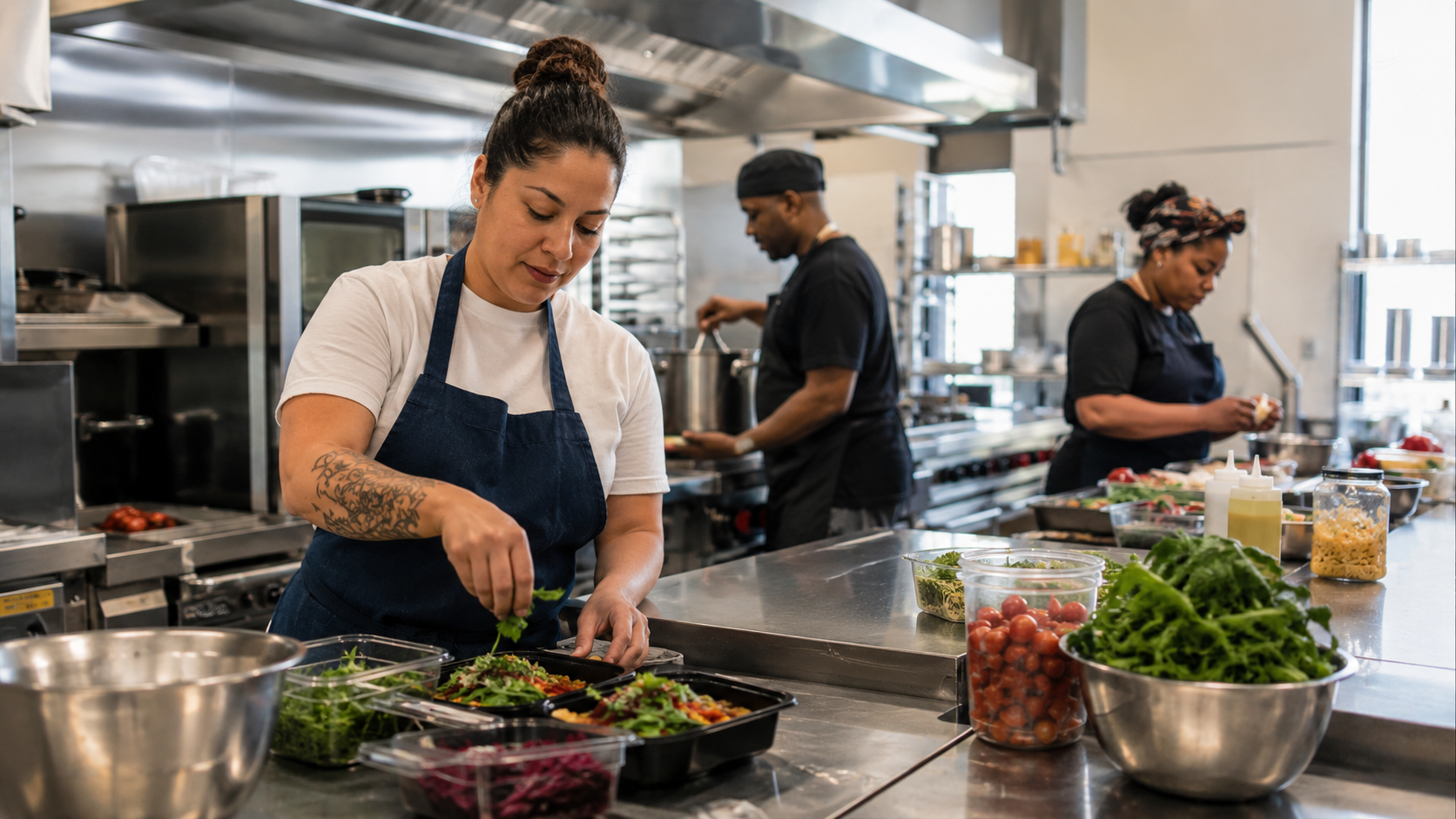
Opening a food business once required a founder to lease a storefront, install expensive equipment, and complete inspections before testing whether customers liked the product. Shared commercial kitchens are changing that sequence. They give small producers access to licensed workspaces by the hour or month, allowing an idea to reach the market with far less fixed cost.
The model serves many kinds of operator. A baker may reserve ovens before dawn, a meal-preparation company may use cold storage during the day, and a sauce maker may book packaging equipment in the evening. By spreading the cost of ventilation, sanitation, and specialized machinery among several tenants, the kitchen can keep each company’s entry price manageable.
Compliance remains central. Reputable facilities maintain cleaning schedules, temperature records, pest controls, and clear storage rules. They also help tenants understand local permits and labeling requirements. This support does not remove the founder’s legal responsibility, but it can prevent common early mistakes and make conversations with inspectors more organized and less intimidating.
Shared space also creates informal business networks. Operators exchange supplier contacts, recommend delivery services, and compare packaging options. A catering company may buy desserts from a neighboring baker, while several brands may combine orders to obtain better ingredient prices. These relationships can turn a rented kitchen into a practical incubator without requiring a formal accelerator program.
There are limits to the arrangement. Popular time slots may be difficult to secure, storage can be restricted, and equipment must suit many users rather than one specialized process. Founders should calculate the full cost of hourly fees, transport, cleaning time, and wasted ingredients. A cheap headline rate can become expensive when production is poorly scheduled.
Successful operators treat the shared kitchen as a testing stage, not simply a room to rent. They track output per hour, customer repeat rates, and profit by product. Those numbers show whether to add shifts, automate a step, or remove an item from the menu. The data also gives lenders and future landlords evidence that demand is real.
For cities, commercial kitchens can widen participation in the local food economy. They help home-based cooks move into regulated production and allow neighborhood brands to grow gradually. The strongest facilities combine safe infrastructure with transparent pricing and business guidance, giving entrepreneurs a practical bridge between a promising recipe and a durable company.
The model also gives founders time to learn what kind of company they want to build. Some will remain flexible shared-kitchen brands, while others will use proven demand to justify a dedicated facility and a larger permanent team.